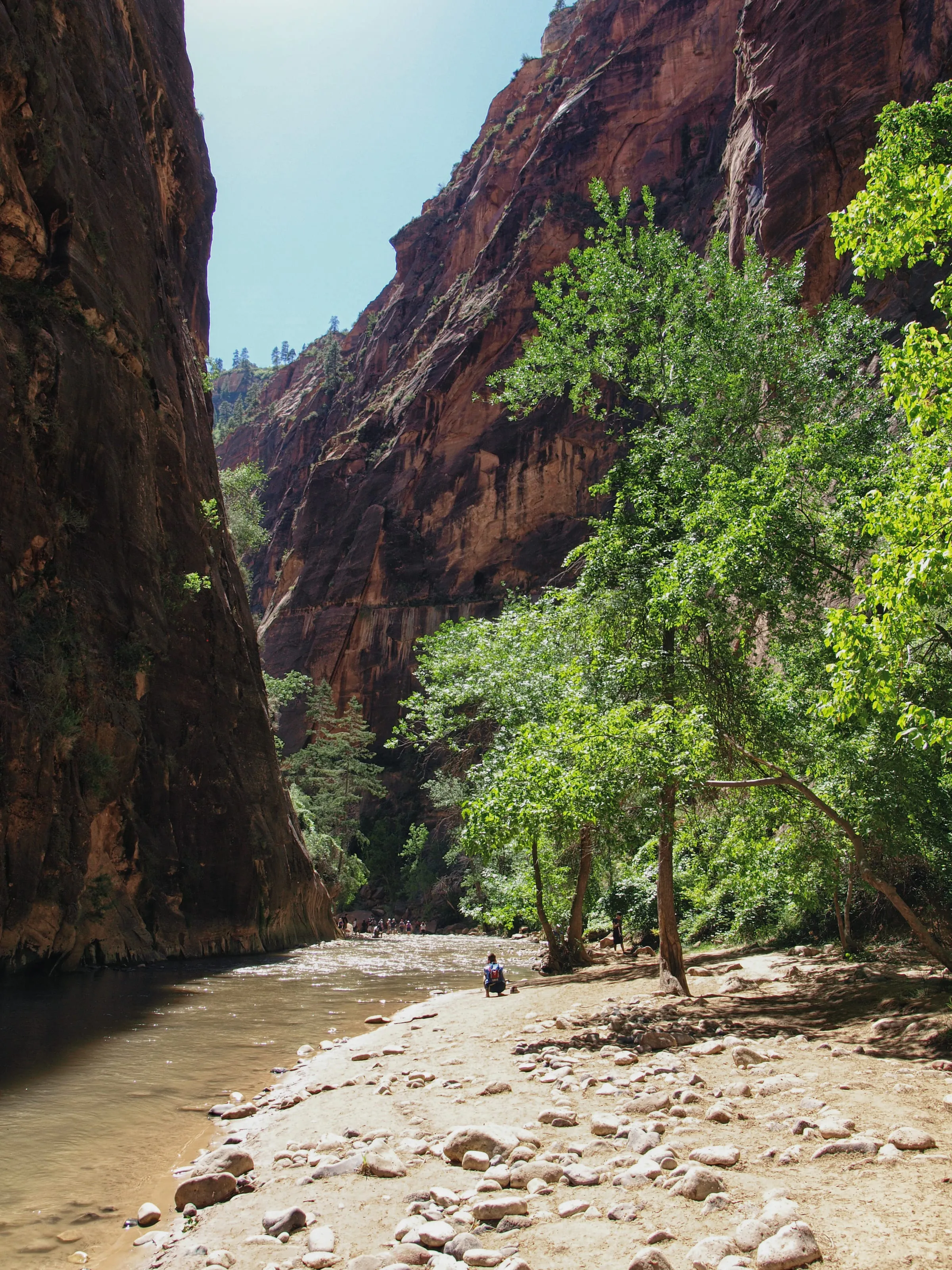
There is no trail. The river is the trail, and that one fact explains everything else about this hike.
How it works
Ride to the end of the line — stop 9, Temple of Sinawava — and walk the paved Riverside Walk for a mile. Where the pavement ends, you step into the water and keep going upstream until you decide to stop.
It is an out-and-back with nothing you have to reach, which is the best thing about it. An hour up and back is a real Narrows hike, and the walls start closing in well before most people turn around.
Going all the way to Big Spring is about 9.4 miles round trip and a serious day. Not because of elevation — there is barely any — but because walking on unseen cobbles in moving water is much slower and more tiring than walking on ground.
The two things that shut it
Flow above 150 CFS. The Park Service closes the Narrows to all travel when the Virgin River runs above 150 cubic feet per second. Spring snowmelt does this routinely, which is why an April trip can arrive to find the headline hike unavailable.
Flash floods. The park’s own guidance is blunt: flooding is possible at any time, and floods have happened on days they were not forecast. Rain twenty miles upstream under a blue sky above you is the exact scenario that kills people in slot canyons.
Check the flow and the flood potential the morning you go, not the week before.
Gear, and why you will probably rent
The Park Service is specific — closed-toe shoes and a sturdy stick, and sandals, Crocs or bare feet are not appropriate. Quick-drying fabric matters more than it sounds, because the canyon is shaded and cold: hypothermia in ninety-degree weather is an ordinary Narrows outcome, not an exotic one.
Springdale outfitters rent the whole package, and in cold months dry bibs or a dry suit. Renting is what most people do and it is the right call unless you already own river shoes.
We earn nothing from those rental shops. None of them are on a booking platform we work with, and we are recommending them anyway.